

Absorb LMS earns a shortlist place when your problem is compliance, certification tracking, or training three separate audiences from one system. It struggles on community features, and it will not give you a published price. Expect a five-figure annual commitment and roughly eight weeks to go live.
Verdict box
Rating: 4.2 out of 5
Best for: Regulated industries, frontline and deskless teams, and any organization training employees plus customers plus partners from separate branded portals.
Not for: Small teams with no dedicated admin, buyers who need a self-serve price, or programs built around peer discussion and community.
Price range: Not published. Absorb quotes by learner band, starting at 1 to 50 learners and running to 25,000 plus. Budget five figures a year for a mid-market rollout, plus implementation.
Standout strength: Compliance and certification management. TrustRadius reviewers score that feature 9.8 out of 10, against a category average of 8.8.
Biggest gap: Social learning and gamification. The same reviewers put both at 6.1, below category average.

How this review was put together
This is a source audit rather than a product trial. Absorb gates its trial behind a business-account form, so nothing here claims to have run one. Every figure below was checked on 30 July 2026 against Absorb’s own live pages, its product documentation, its dated press releases, verified reviews on G2, Capterra, TrustRadius, Trustpilot and Gartner Peer Insights, or contemporaneous news coverage.
That matters because of what it turned up. Nearly every pricing figure and app store rating circulating about Absorb LMS traces back to one TechRadar review from 11 October 2021, never re-tested, and still being copied into comparison tables and AI answers five years later. Where a number could not be confirmed here, it is flagged rather than repeated. That happens once below.
What Absorb LMS is, and who actually buys it
Absorb LMS is a cloud learning management system sold by Absorb Software Inc., based in Calgary, Alberta. It handles employee training, customer education, and partner enablement from one tenant, with separate branded sub-portals for each audience.
How long has Absorb LMS been in business? Longer than most of its rivals, and the exact year is genuinely muddled. Absorb’s own 2017 funding announcement said the company was founded in 2003. CBC News, reporting the 2021 buyout, said 2002. Business databases split roughly down the middle.
The company did not begin life as Absorb. It started as Blatant Media, a bootstrapped partnership credited to Mike Owens, with Mike Eggermont named as co-founder in several company profiles. You can still see the fingerprints. The oldest review on Absorb’s Capterra profile dates from February 2009 and refers to “Blatant Media’s Absorb LMS.” Treat 2002 or 2003 as the honest answer, and do not let anyone claim more precision than the sources support.
Who owns Absorb LMS? Welsh, Carson, Anderson & Stowe, a New York private equity firm, which acquired the company in April 2021 in a deal reported at around 500 million US dollars. Before that, Silversmith Capital Partners led a 59 million dollar growth investment in 2017. Kimberly Williams is Chairperson and Chief Executive Officer. Saravana Sivanandham is Chief Product and Marketing Officer.
Which companies use Absorb LMS? Named customers on Absorb’s own case study library include Rakuten, Whirlpool, Atlassian, Five Guys, Petro-Canada, Baker Tilly, Life Time, Children’s Hospital of Philadelphia, ATI Physical Therapy, Wincanton, and LAZ Parking. That list skews toward multi-site operations carrying a compliance burden, which tells you where the product actually lands.
Scale claims need a caveat, and this is the first place the audit turned something up. Absorb’s Our Story page currently says 34 million users, 2,900 plus customers, 190 verticals, 34 countries, and 112 awards. Its own May 2026 Aura press release says 37 million learners and more than 3,500 organizations. Both are Absorb’s numbers, published by Absorb, and they do not agree. Ask which figure your account team is standing behind.
Absorb LMS pricing, and what a quote actually looks like
What does Absorb LMS cost? Absorb does not publish a price list. The Get Pricing page, checked on 30 July 2026, is a quote request form and nothing more. You pick a learner band, hand over a work email, and wait for a call.
The bands themselves are the most useful public pricing signal available, because they show how Absorb segments deals:
| Learner band | What it tells a buyer |
| 1 to 50 | Absorb will quote here, but this is not where the product is aimed |
| 51 to 150 | Small end of mid-market |
| 151 to 250 | Same |
| 251 to 500 | The band most first-time mid-market buyers land in |
| 501 to 1,000 | Where dedicated admin resource becomes assumed |
| 1,001 to 5,000 | Enterprise motion begins |
| 5,001 to 25,000 | Enterprise |
| 25,000 plus | Custom |
Now the figures you will find everywhere else. That October 2021 TechRadar review reported an 800 dollar base licence, 16 dollars per active learner per year, a 3,200 dollar setup fee, and around 14,500 dollars a year for up to 500 users. It also priced the Elite support tier at 5,000 dollars and Enterprise at 25,000 dollars.
None of those figures could be verified at source in 2026. They are five years old, they predate the full effect of the private equity ownership change, and Absorb has since moved several capabilities into separately licensed modules. Any page presenting them as current Absorb pricing is guessing. They are historical context, not a quote anyone can be held to.
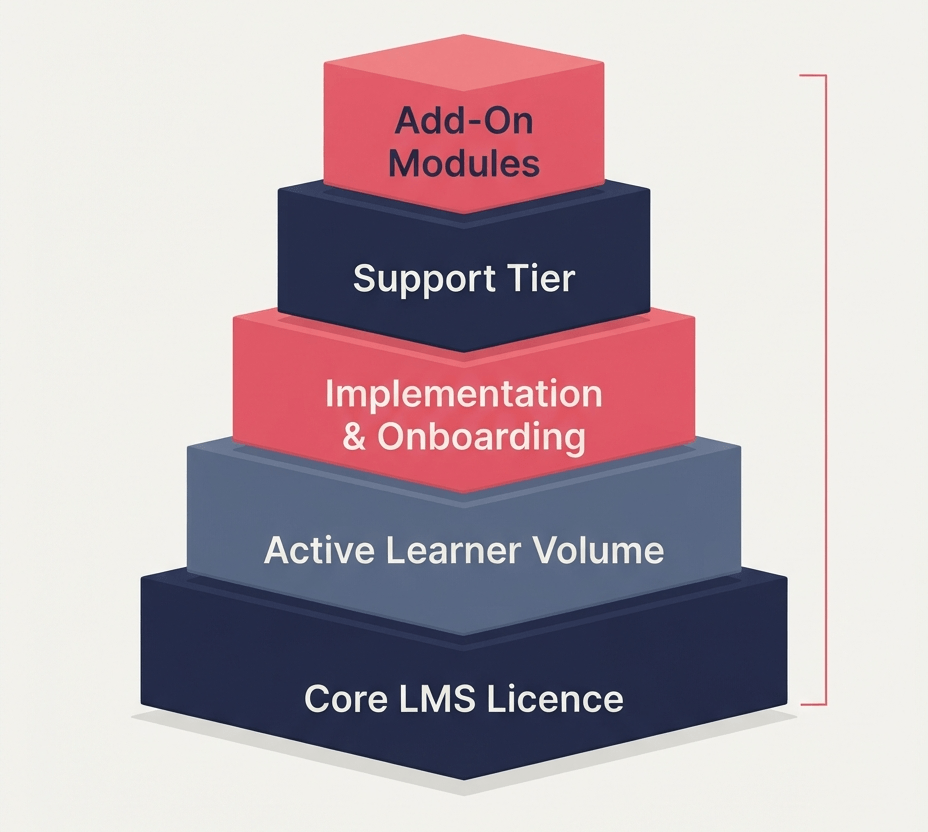
What can be stated confidently is the shape of the bill. The line items that move a total are the LMS licence, active learner volume, implementation and onboarding, the support tier, and add-on modules. Absorb Analyze, Absorb Create, Absorb Engage, mentoring, and the Amplify content library are all sold separately. One enterprise reviewer on TrustRadius named the compromise directly: add-ons need their own packages, which keeps the core LMS comparatively affordable and pushes cost into the extras.
Negotiation levers to get in writing: the definition of an active learner versus a seat, the renewal uplift cap, what happens if you overshoot your band mid-term, whether the implementation fee is fixed or scoped, and which modules are included rather than quoted separately. Do the arithmetic before the call, not after, and if you need a framework for it, work through how to calculate LMS ROI first.
Is there a free trial of Absorb LMS?
There is a free trial, and it is gated. The free trial page is a lead form asking for learner count, work email, and country. It does not state a trial length, list what is included, or grant instant access. G2’s profile confirms a trial exists, so the mechanism is real. You just cannot self-serve it, and individuals without a business email are unlikely to get one.
There is no free plan and no perpetual free tier. If a comparison table tells you otherwise, it is wrong.
One useful detail from a Capterra reviewer in knowledge management: Absorb provided a trial portal they could load with their own content during evaluation. That is worth asking for by name. A demo tenant full of somebody else’s courses tells you very little about your own content.
Course building, authoring, and the AI
Absorb ships a built-in course builder, supports SCORM 1.2 and 2004 plus xAPI, and handles instructor-led and blended sessions alongside self-paced courses. Absorb Create is the separate authoring tool, sold as an add-on and usable inside the LMS.
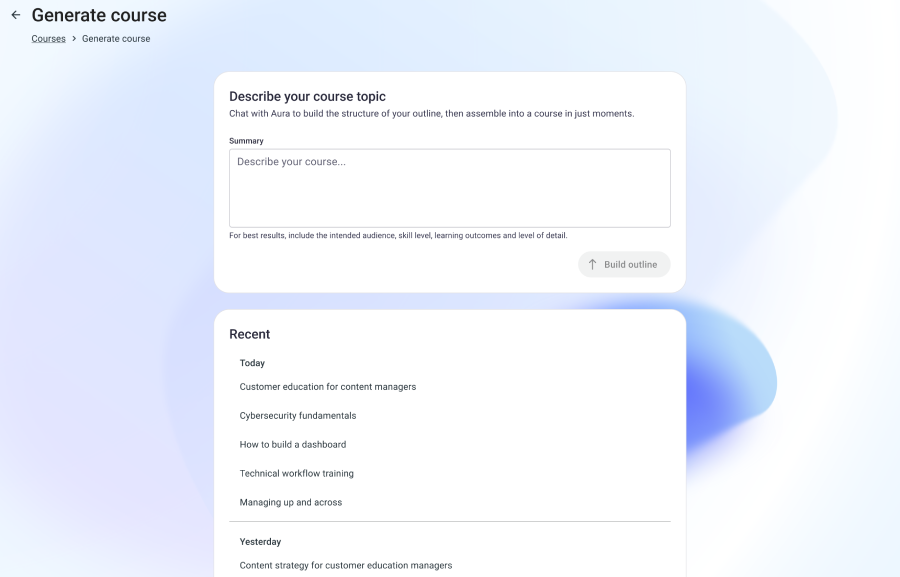
You can now generate a full course from a prompt. Create AI, the generative layer inside Absorb Create, builds a course from a short description or outline, then produces the narrated video, slides, screenshares, and quizzes to go with it. Absorb says traditional authoring takes around 49 hours per course, a benchmark its own marketing uses to show off Create AI’s speed. Output publishes to SCORM, xAPI, HTML5, or straight into the LMS.
Absorb Aura, launched 19 May 2026, sits above that as the agentic layer. Aura Admin Assist answers platform questions and generates reports in plain language. The Aura Learner Agent bundles four agents, covering discovery, Q&A, recommendations, and external knowledge, and runs inside the learner experience, Microsoft Teams, or a Chrome extension. Aura Create handles conversational authoring from SharePoint, Confluence, OneDrive, Google Drive, Box, and Dropbox.
One detail procurement should raise early: Aura rolled out between 15 May and 15 June 2026, and is only available to customers who have signed Absorb’s AI terms or sit on its latest contract. It may not appear in an older tenant at all. System administrators can toggle each agent in client settings, and the learner agent can be limited to specific groups.
On governance, Absorb states the agents are grounded only in the customer’s approved content, isolated by tenant, and built on the Model Context Protocol so the system reads connected tools without copying data. They are not trained on the open internet. Absorb also reports 95 percent useful responses and 94 percent single-response resolution from its February 2026 beta, with Admin Assist deflecting 40 to 60 percent of routine tickets. Those are vendor figures with no independent verification, so ask for the methodology on the demo call.
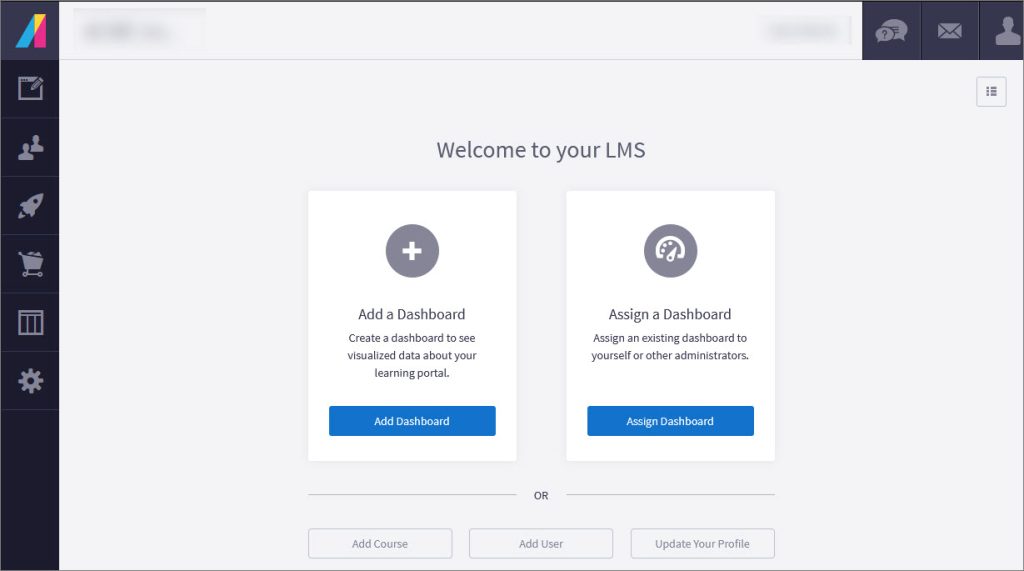
The admin experience
This is where reviewers are most consistent, and the consistency is not flattering. TrustRadius lists “administrative portal navigation requires excessive clicks” among the product’s recurring cons. The pattern shows up in specifics, not just adjectives.
A learning director at Mister Car Wash, running Absorb across more than 7,000 frontline employees, singled out the on-the-job training checklist as cumbersome for admins and worse for users, who click through several screens to sign off skills. A verified reviewer in June 2026 said visual customization options were hard to find in settings and needed the implementation project manager to locate them. A Gartner Peer Insights reviewer noted occasional slowdowns in some features and a setup process that required more training than expected.
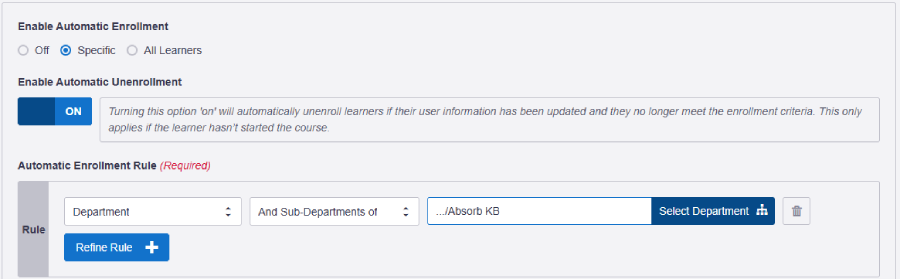
Set against that, the enrollment rule engine draws real praise. The Straumann reviewer said no other LMS met their requirements more easily, because rules build on learner attributes like department, location, job role, and group, with include and exclude logic.
G2’s aggregate sub-scores put the same tension in numbers. Ease of use sits at 8.8 and ease of admin at 8.7. Ease of setup drops to 8.4. Absorb is easier to run than it is to stand up, and that gap is the single most useful thing to know before signing.
How it configures: roles, permissions, and customization
Product pages tell you what an LMS does. Configuration menus tell you what it will be like to own. This section is about the second thing, and it is the part almost no published review of Absorb covers. If your requirements list is still taking shape, start from the core LMS features every buyer should check, then read the rest of this section against it.
User roles and permissions
Absorb ships four standard admin roles. System Admin sits at the top and is the only one that can open Portal Settings or impersonate another admin. Admin covers nearly everything else. Instructor is scoped tightly to attendance and grading for the sessions that person teaches. Reporter can read reports, build and save custom ones, and export to Excel or CSV without touching any content. A fifth role, Create Editor, appears only if you have bought the Create add-on.
Custom roles are where it gets good. Permissions form a tree rather than a flat checklist, and the branches go deep. You can grant rights over an instructor-led course’s schedule while withholding them over its enrolments.
Better still, scope and permission are separate systems. The role decides what an admin may do. A user management setting on that admin’s own profile decides whose records they may do it to, limited to a department, a group, or everyone. Franchise operators and multi-brand groups should look closely at that split. It is what lets a regional trainer run full reports on their own region and see nothing outside it.
Two traps to know before you design your role model. Default roles carry hidden permissions that cannot be seen or removed, and those get inherited if you duplicate a default role as a starting point. Absorb’s own guidance is to build custom roles from scratch instead. Second, the default Admin and System Admin roles pick up new permissions automatically whenever new features ship. For a regulated buyer running quarterly access reviews, that is a real governance problem, and the answer is again a custom role.
My evaluation: one of the stronger permission models in the mid-market, and the two-layer design beats what most competitors manage. Marked down for the hidden-permission inheritance, which is exactly the sort of thing you discover six months in.

Departments and groups
Departments are mandatory, hierarchical, and one per user. Groups are optional, unlimited per user, and either hand-picked or filled automatically by rule.
The rule builder is a real one. Text fields accept contains, starts with, ends with, equals, does not equal, and does not contain. Date fields take before, after, and between. Departments can include or exclude their sub-trees. Refining a rule chains conditions with AND, while adding a rule creates OR. Build a group once and you can reuse it across fifty courses instead of rebuilding the same enrollment logic fifty times.
The architectural point that matters most: departments carry the branding, not groups. Each department can have its own learner experience and its own URL route. That is the mechanism behind the multi-audience portals Absorb sells. Your department tree is really your portal design, and getting it wrong is expensive to undo later.
Limits to plan around. Groups do not nest, so all hierarchy has to live in departments. A group’s rules cannot reference another group. An admin can be scoped to only one group at a time. Automatic groups quietly exclude inactive users, which matters if you ever need to report on leavers. Rule changes are also processed in batches roughly every ten minutes rather than instantly, so do not panic during testing.
My evaluation: flexible enough for complicated organizations, with one hard ceiling. If your structure needs nested dynamic groups, model it in departments or accept a workaround.
Branding and customization
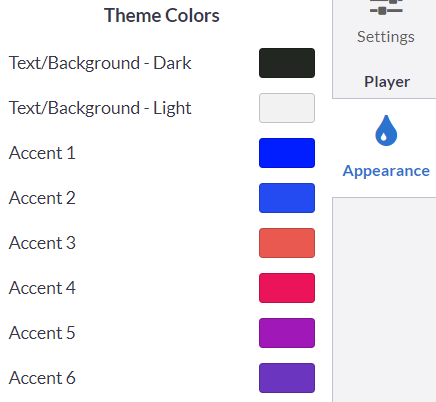
Deeper than expected. Color is controlled through named variables rather than one accent picker, split across branding elements like base, header, footer, login and splash screen, then learner experience states, dashboard, typography, and icons. Enter a hex or RGB value and the system generates the darker rollover shade for you.
The state colors are handled properly too. Success, failure, warning, and danger each get their own variable rather than one generic accent doing all four jobs.
Worth crediting: the customization guidance carries an accessibility advisory naming WCAG AA and the 4.5 to 1 and 3 to 1 contrast ratios. Most vendors leave buyers to work that out alone. Public sector and higher education buyers should note it.
My evaluation: strong. This is a design system rather than a logo upload. Combined with department-level theming, you can run genuinely distinct portals from one tenant. It also explains the reviewer complaint that customization settings are hard to find. There are simply a lot of them.
Assessments and question types
Absorb’s native assessment object, the one built into the LMS itself, supports three question types: multiple choice with a single answer, multiple choice with several answers, and free text. That is the entire list.
Absorb Create, the paid authoring add-on, is considerably better. Its quiz page adds true or false, matching, and sequencing, for five types in total. Each question can carry an image, video, or audio file. You can shuffle questions and answers, set retries from none through to unlimited or until passed, define a passing percentage, decide whether the score counts toward course completion, and write custom feedback for every individual answer rather than one message for pass and one for fail. Quizzes can be generated with AI too.
So the honest framing is a paywall rather than a missing capability. The interactive question types exist. They are just not in the product you buy first.
Still absent from both: hotspot questions, fill in the blank, and numeric entry.
The surrounding machinery in the LMS is decent either way. Question banks are reusable across assessments and can serve questions in random or fixed order. Question groups organize long assessments without the learner seeing the seams. Each question carries its own weight, and you can attach a file or a URL.
My evaluation: the native assessment is adequate for compliance knowledge checks, which is what most Absorb customers run. Anything more interactive means licensing Create or authoring in a separate tool and importing as SCORM. Both work. Get Create priced into the original quote rather than discovering the need in week six.

Everything else in the setup menu
A quick inventory to check requirements against: message templates for notifications, translations, portal FAQs, certificates, competencies, tags, course ratings and comments, enrolment keys, e-commerce with coupons and transactions, SSO settings, department-level cookie banners, and admin dashboards covering system usage, logins, and search analytics.
Two more interfaces exist beyond the admin and learner views, each with its own permissions: a manager experience for people leaders and a reviewer experience for content approval. Budget time for both during implementation, because they are easy to overlook in a demo and annoying to retrofit.
The overall read. Absorb rewards planning and punishes improvisation. Nearly everything a mid-market buyer needs is present, the permission and branding models sit above category average, and assessment authoring is the one place where a genuine requirement could go unmet.
The learner experience and mobile
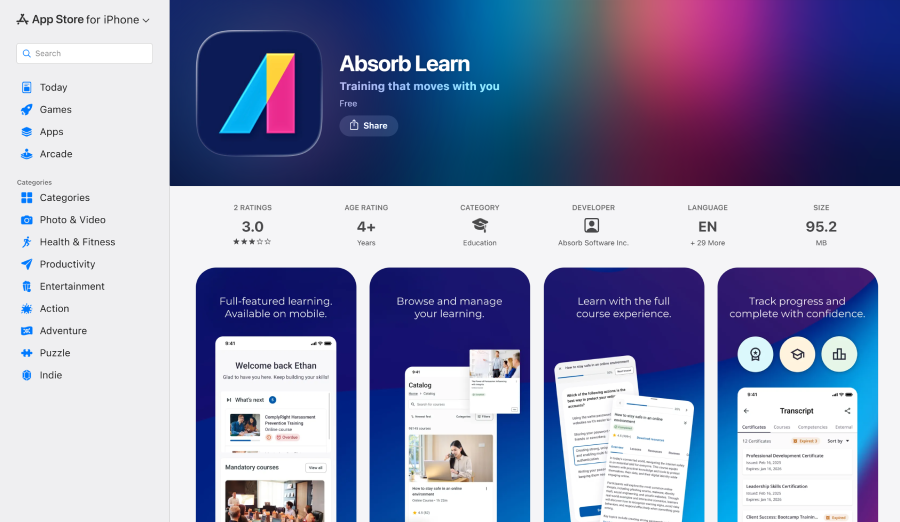
Absorb relaunched its learner experience in the same week as Aura, in May 2026. The new architecture is web-first and spans desktop, mobile web, and a native app, with cross-device progress tracking and workflows aimed at distributed and frontline teams.
The app is called Absorb Learn. It supports offline downloads with later sync and runs in thirty languages. Version 4.0, the rebuild itself, shipped on 19 May 2026.
Older reviews quote app store ratings of 2.6 on iOS and 2.9 on Android, both traced to that 2021 TechRadar piece. Neither describes the app you would install today. Checked on 31 July 2026, Absorb Learn holds 3.2 out of 5 on Google Play from 44 reviews. The App Store listing carries a notice that its overall rating was recently reset, which Apple permits after a major rebuild, so the score there tells you nothing yet. Read both with care, because Absorb also sells custom-branded builds that never touch the public listings.
My evaluation: competent rather than remarkable. The rebuild was real engineering, but a 3.2 average is not the mark of a mobile-first platform. If the phone is the primary device for most of your learners, test it against the platforms built mobile first before committing.
Learner-side sentiment is otherwise good. TrustRadius scores mobile friendliness at 7.9, slightly above category average, and a field-heavy reviewer noted learners can pause training without losing their place, which their previous system did not allow.
Reporting and analytics
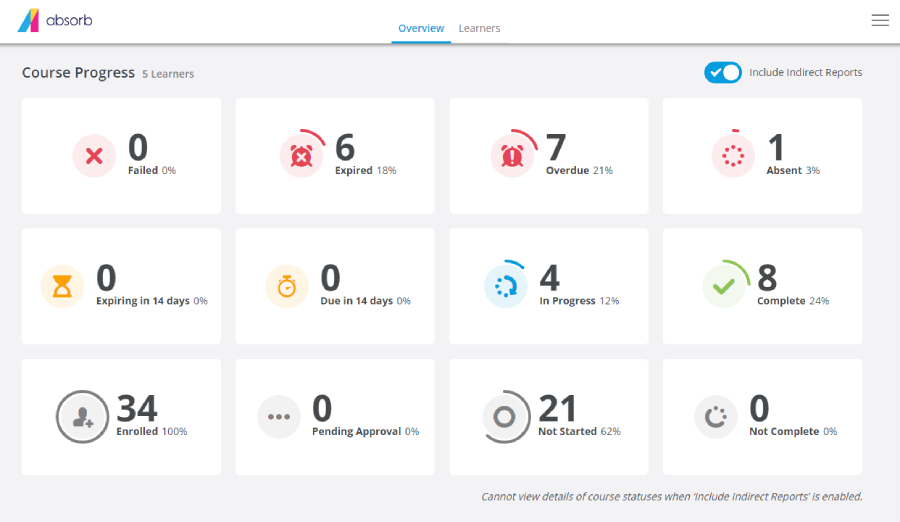
Absorb deserves full credit here. This is the genuine strength, and it is why compliance-driven buyers keep shortlisting it.
Configurable reports, pre-built templates, scheduled delivery, and enrol-from-report actions all work as advertised. Absorb Analyze is the paid add-on that moves you from operational reporting into dashboards and BI-level analysis.
The wall is real, though, and reviewers hit it in the same place. TrustRadius reports that 29 percent of reviewer feedback asks for more robust and customizable reporting. One long-tenured customer wanted mass reports spanning multiple courses and users. Another wanted the ability to see and archive deleted enrollments for audit purposes, which is a legitimate compliance requirement rather than a nice-to-have.
So the honest summary is this. Standard questions get answered fast. Ad hoc questions cutting across courses, admins, and historical records often need Analyze, an export, or both.
Automation, integrations, SSO, and security

Absorb offers turnkey connectors, SAML single sign-on, and a RESTful API with webhooks. Dedicated Salesforce and ADP connectors are sold as named products. TrustRadius lists Workday, ADP Workforce Now, BambooHR, Microsoft Teams, Zoom, Webex, and Salesforce among integrations reviewers actually report using.
Absorb also sells paid services to build custom integrations, which is the honest answer to “does it integrate with our stack.” Usually yes, sometimes for a fee. No total integration count appears here on purpose, because competitor reviews cite a figure that could not be verified at source.
One cost warning from reviewers: the Mister Car Wash director described the Skillsoft connection as costly and slow to implement. API integration setup sits in the Enterprise support tier, so integration ambition and support tier are linked decisions.
On security, Absorb publishes a compliance overview and runs a bug bounty program, and SSO-enabled learning scores 9.8 on TrustRadius. Verify SOC 2 Type II status, GDPR data subject request handling, and data residency options with your account team, and get the current attestation dated. That is standard practice rather than skepticism about Absorb specifically.
Support, implementation, and Absorb Academy
Support is Absorb’s best-reviewed attribute by a wide margin. G2 scores quality of support at 9.5. Absorb runs it 24 hours a day, every day of the year, and states it is 100 percent in-house rather than outsourced. Published average ticket response is 2 to 24 hours depending on urgency, faster on Enterprise.
Three tiers exist:
Premium. Included with every purchase. Covers onboarding and training, then phone, email, and ticket support, plus self-serve resources.
Elite. Adds a dedicated Client Success representative and regular business reviews.
Enterprise. Adds a dedicated Client Success Manager, on-site training options, and API integration setup.
One limitation buyers outside English-speaking markets should note. The admin and learner experiences configure into dozens of languages, but Absorb’s 24/7 support is currently available in English only.
Implementation runs to a published standard of eight weeks to go live, with a dedicated onboarding specialist, weekly status updates, and a further 60 days of monitoring afterward. Custom integrations and reporting can extend that. Absorb is explicit that you need at least one dedicated LMS administrator or project manager on your side, plus your content ready.
That requirement is not boilerplate. The one detailed negative review on Trustpilot, from a small business owner who signed in December 2025, turns on exactly this point. The hands-on time and internal workload needed to make the system functional were not clear going in. If nobody owns this system on your side, believe them rather than the eight-week figure.
Absorb Academy is the self-paced training hub, and it is a real asset rather than a knowledge base with a nicer name. Absorb runs it inside Absorb, so you can see the product used properly before building anything yourself. Customers reach it from the admin experience through the Help & Support icon, signing in with an email address and a one-time code. Prospects can get access too, which is worth requesting during evaluation. Courses cover fundamentals, admin workflows, feature-specific training, and new releases, with progress tracking and completion certificates. Capterra reviewers mention Absorb Academy by name more often than almost any other supporting resource.

The rest of the Absorb product family
Absorb sells a platform, not one product, and a quote can include any of these. Worth learning the names before your first call, because several capabilities competitors bundle are priced separately here. The full list is on Absorb’s products page.
Absorb LMS. The core platform.
Absorb Aura. The AI agent layer.
Absorb Create. Course authoring.
Absorb Analyze. Reporting, dashboards, and BI-level analytics.
Absorb Engage. Social learning and gamification.
Absorb Infuse. Headless delivery, inside the tools people already use.
Absorb Skills. Role-based upskilling paths.
Absorb Amplify. Prebuilt content libraries, including healthcare catalogs.
Mentoring and coaching. Added to Absorb LMS in 2025.
Salesforce and ADP connectors. Named turnkey integrations.
Awards, analyst recognition, and how much of it to weigh
Absorb has a lot of trophies, and they are not all worth the same. Three belong in a procurement pack. Forrester named it a Leader in the Q4 2025 Wave for Learning Management Systems, top-ranked on Strategy. Fosway placed it as a Core Leader with an Excelling Trajectory on the 2025 9-Grid, the best position in that quadrant. Talented Learning rates it a Powerhouse Learning System.
Badge counts tell you about review volume rather than product quality, so discount the 131 G2 badges accordingly. One thing worth knowing: read on 30 July 2026, Absorb’s awards page carried nothing from 2026 at all and still displayed a 2022 ranking. Pull the current analyst reports instead of the page.
What reviewers actually say
Absorb scores well across every major review platform, and the four platforms disagree in an informative way.
| Platform | Score | Volume | What it is good for |
| G2 | 4.6 out of 5 | 960+ | Objection language in buyers’ own words |
| Capterra | 4.5 out of 5 | 350+ | Long history, back to 2009 |
| TrustRadius | 9.2 out of 10 | 260+ | Feature-level scores and detailed use cases |
| Trustpilot | 2.8 out of 5 | 4 | Almost nothing, and here is why |
Scores checked 30 July 2026. Volumes move weekly.
Two things before you read any of it. The Trustpilot score is close to meaningless. It rests on four reviews, and Trustpilot’s own notice says Absorb has never invited customers. Read that one review for its substance on implementation workload, then ignore the 2.8. Separately, watch for a name collision. A UK distance-learning provider called Absorb Online Learning has its own Trustpilot profile full of angry parents and no connection to this company.
The recurring praise across all four platforms: an intuitive interface for learners and admins, responsive support during implementation, and deep branding control. The recurring complaints, just as consistent: reporting depth, course builder limits on advanced interactive content, and too many clicks in the admin portal.
TrustRadius feature scores separate strength from weakness most cleanly. Compliance management 9.8. SSO-enabled learning 9.8. Assignments 9.7. Then mobile friendliness 7.9, social learning 6.1, gamification 6.1. That is the product in six numbers. Those last two are worth dwelling on if engagement is your problem, because platforms designed around game mechanics score very differently.
Three reviews worth reading in full. Note that many TrustRadius reviews of Absorb carry an Incentivized label, disclosed and small, which is context worth having when a 9.1 looks unanimous.
Seven years with Absorb, from a learning director at Mister Car Wash, March 2026. Frontline scale, and honest about checklist friction and integration cost.
Strong automation and reporting at scale, from Straumann Group, February 2026. The clearest explanation of the enrollment rule engine published anywhere.
Strong solution for enterprise learning management, from a North American parking operator, June 2026. Wants better community features and stronger post-completion rules.
Who Absorb LMS fits, by scenario

Frontline and deskless workforces
A good fit, and one of the clearest. Mister Car Wash runs more than 7,000 frontline employees on it, and Petro-Canada uses it for frontline modernization. Test the on-the-job checklist feature specifically, because that is where frontline reviewers report friction.
Healthcare and pharmaceutical
Strong. Hospital and health care is the largest reviewer industry on G2 at around 7.5 percent, and credentialing and recertification workflows are well proven. Verify data residency and audit trail depth before signing.
Financial services
A reasonable fit. CAPTRUST and Finance of America appear in the case study library, and scheduled reporting supports audit cycles well. It holds its own against the other LMS options for banking and financial services.
Professional services firms
Works well. Baker Tilly ran a global rollout, and professional, scientific, and technical services is the second largest installed industry in TrustRadius data at 13.9 percent.
Tech companies
Mixed. Atlassian and Litmus both use it, and it fits if you want customer education plus employee training in one system. If community and peer learning sit at the center of your program, look elsewhere.
Customer and partner education
Absorb’s signature use case. Separate branded sub-portals, department hierarchies, and eCommerce for selling courses are all there. Pierre Fabre USA and The Toro Company are the reference programs.
Certification-heavy programs
Yes. Certification tracking with expiry dates, recertification windows, and auto-renewal is the thing Absorb does better than its overall scores suggest.
Small teams with no dedicated admin
This is the buyer to steer away. Absorb quotes at 1 to 50 learners and will happily sell to you. But implementation assumes a dedicated administrator, ease of setup is the weakest G2 sub-score, and the one substantive Trustpilot complaint is a small business underestimating exactly that workload. Look at lighter platforms built for small businesses instead.
Absorb LMS pros and cons
| Pros | Cons |
| Compliance and certification management, scored 9.8 by TrustRadius reviewers | No published pricing at all, and the quote form is the only route in |
| Support rated 9.5 on G2, in-house and 24/7 | Support available in English only, despite multilingual learner and admin experiences |
| Enrollment rule engine that reviewers say competitors cannot match | Admin portal navigation needs too many clicks for common tasks |
| Multi-portal branding for employees, customers, and partners in one tenant | Social learning at 6.1 and gamification at 6.1, both below category average |
| Reporting that answers standard questions well, with Analyze for depth | Ad hoc and cross-course reporting hits limits without the paid add-on |
| Mature 2026 AI layer with tenant isolation and traceable citations | Absorb arrived late to AI agents, and independent scoring has not caught up |
| Published eight-week implementation with 60 days of follow-up monitoring | Modules priced separately, so the quote grows faster than the licence suggests |
| Long track record, roughly 23 years, and PE-backed stability | Company’s own scale figures do not agree across its own pages |
| Granular custom admin roles, with admin scope set separately from admin rights | Only three assessment question types: single answer, multiple answer, and text |
| Department-level theming via named color variables, with WCAG contrast guidance | Groups cannot nest, and duplicated default roles inherit hidden permissions |
The verdict, and five questions to ask on the demo call
Absorb LMS is a genuinely good compliance and certification platform with an unusually strong support organization attached. If your shortlist criteria are “prove people completed mandatory training, track expiry, and do it across three audiences from one system,” it deserves to win a fair number of those evaluations.
It is not the most modern platform on the market, and it does not pretend to be a community. The gaps sit where they have always sat: social learning, gamification, and reporting depth beyond the standard questions. What changed in 2026 is the AI layer, which went from a real weakness to a credible answer in a single release.
Why do companies leave Absorb LMS? Cancellation searches are low volume but persistent, so it deserves a plain answer. From what reviewers actually write, three reasons recur. Add-on costs accumulate until the renewal number no longer resembles the original quote. Reporting limits push teams toward a platform with native BI. And admin click depth wears down the one person who lives in the system every day. None of those are dramatic failures. They are slow frustrations, and they surface at renewal rather than in year one.
The five questions worth asking:
- Which of these modules are in this quote, and which are quoted separately? Read the list back, item by item.
- How do you define an active learner, and what happens if you exceed your band in month seven?
- What is the contractual cap on renewal uplift?
- Show me Aura Admin Assist generating a report that has not been pre-built, live, in a tenant with real data volume.
- Which support tier does this quote assume, and what does the next one up actually add for your situation?
Ask the fourth one first if AI is the reason you took the call. It is the fastest way to tell a demo script from a working feature.
If Absorb comes out too expensive or too admin-heavy for your team, the next thing to read is my guide on best LMS platforms for corporate training.
FAQ
What does Absorb LMS cost?
Absorb does not publish pricing. You request a quote by learner band, from 1 to 50 learners up to 25,000 plus. Figures circulating online, including an 800 dollar licence and 16 dollars per active learner, come from a 2021 TechRadar review and could not be verified in 2026. Budget five figures annually for a mid-market rollout, plus implementation and any add-on modules.
How does Absorb LMS work?
It is a cloud LMS. Admins build or upload courses, including SCORM and xAPI content, then use enrollment rules based on attributes like department and job role to assign training automatically. Learners access courses through a branded portal, on desktop or the mobile app, with offline support. Completions, certifications, and expiry dates feed into configurable reports.
Does Absorb LMS support SCORM and xAPI?
Yes. SCORM 1.2, SCORM 2004, and xAPI are all supported, alongside instructor-led and blended delivery.
Is Absorb LMS good for compliance training?
It is one of the strongest options available. TrustRadius reviewers score compliance management 9.8 out of 10 against a category average of 8.8, and certification tracking with expiry and recertification is well proven in healthcare and regulated industries.
How does Absorb LMS compare to Docebo?
Absorb generally wins on support quality, compliance depth, and multi-audience portals. Docebo is usually stronger on social learning and content curation. Docebo is the alternative Absorb reviewers say they evaluated most often.
How long does Absorb LMS implementation take?
Absorb publishes a standard eight-week onboarding and implementation plan, followed by 60 days of monitoring. Custom integrations and reporting can extend it. You need at least one dedicated administrator or project manager on your side.
What are the biggest complaints about Absorb LMS?
Reporting depth, admin portal click depth, limits on advanced interactive content in the course builder, and add-on costs that accumulate. Social learning and gamification also score below category average.