Last updated: 16 July 2026
You probably did not set out to replace your LMS. You opened a renewal quote, or a report you could not build, and figured there had to be a better option. That is where most searches for TalentLMS alternatives begin. Below, I compare the ten strongest picks for 2026 head to head with TalentLMS.
TL;DR: the shortlist
Here is the quick read before the detail.
- iSpring LMS is the shortest path from a PowerPoint slide deck to a trackable course.
- Docebo wins for large enterprises that want AI content curation and skills analytics.
- Absorb LMS suits mid-market and enterprise teams that live in reports and need SOC 2.
- LearnUpon is built for training employees, customers, and partners from separate portals.
- 360Learning fits teams that want subject matter experts creating the courses.
- Litmos is a fast route to compliance training with a ready-made content library.
- Moodle is the free, open-source base for teams with technical hands on deck.
- Adobe Learning Manager leans into customer education, gamification, and its player.
- CYPHER Learning packs an LMS, authoring, and skills tracking into one platform.
- Tovuti is strong for interactive, gamified courses with plenty of built-in content types.
Most teams leave TalentLMS for the same reason. They start on the entry tier, then hit a ceiling as headcount, reporting needs, and admin complexity grow.
What pushes teams off TalentLMS

TalentLMS earned its popularity. It is easy to launch, the pricing is published, and small teams get running fast. The friction shows up later, once training spreads across more people and more use cases.
Here is what I hear most from teams that are switching.
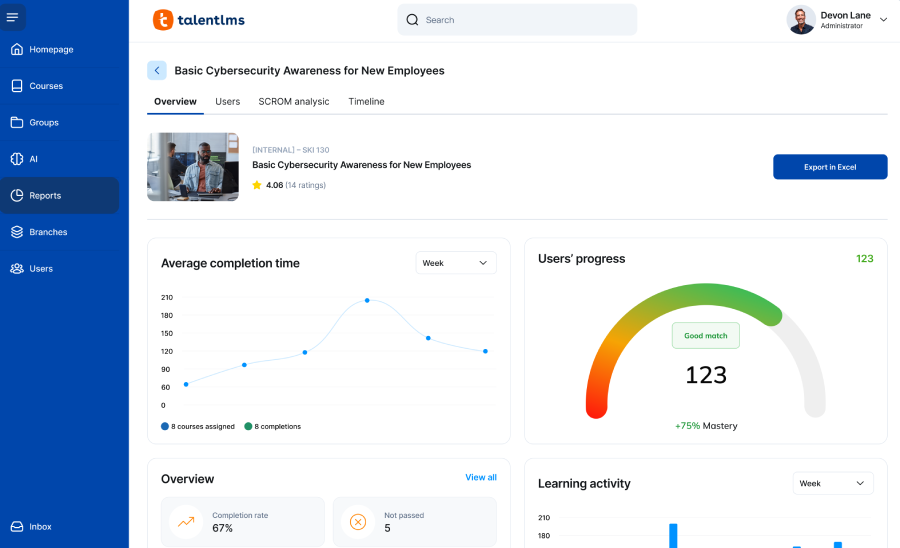
Scaling ceiling. TalentLMS is a great starter platform. Reviewers on G2 note that it can struggle to match the needs of larger organizations, and admins run into configuration limits when workflows get complex. As you add audiences and portals, the gaps get harder to work around.
Thin reporting. The built-in dashboards cover the basics. They do not go far when leadership wants time-to-proficiency, certification history, or executive-ready views. Teams that need real analytics usually export to spreadsheets, which defeats the point.
Pricing that moves with usage. The active-user model is friendly at a small scale. It gets less predictable as monthly active learners climb, which is a common surprise for growing companies.
Dated admin and learner experience. The interface does the job, but reviewers often compare it unfavorably to newer platforms on look and feel.
Weak automation and integrations. Automated enrollment, reminders, and report delivery are limited. Deep HRIS and CRM connections often need middleware.
The security question. TalentLMS publishes strong credentials, including ISO 27001:2022, ISO 9001, GDPR alignment, and CSA STAR Level 1. What it does not advertise the way some rivals do is a SOC 2 Type 2 report. If your IT or procurement team requires SOC 2 specifically, ask TalentLMS for the current report, and know that platforms like Absorb publish theirs openly. For context on what to check, see our notes on LMS implementation.
TalentLMS alternatives at a glance
This table gives you a fast comparison. Ratings are approximate G2 scores and shift over time, so confirm them before you publish anything internal.
| LMS | Best for | G2 rating (approx.) | Standout feature | Edge over TalentLMS |
| iSpring LMS | SMB and mid-market, PowerPoint teams | 4.6 | PowerPoint-based authoring | Fast setup, strong support, automation |
| Docebo | Large enterprises | 4.3 | AI content tagging and skills | Enterprise analytics and automation |
| Absorb LMS | Reporting-heavy mid-market | 4.6 | Absorb Analyze reporting | SOC 2 Type 2, deeper analytics |
| LearnUpon | Multi-audience training | 4.5 | Clean multi-portal setup | Separate portals per audience |
| 360Learning | SME-led content | 4.6 | Collaborative authoring | Experts build and maintain courses |
| Litmos | Compliance and content | 4.3 | Litmos Training Content library | Off-the-shelf courses, Salesforce fit |
| Moodle | Technical teams, tight budgets | 4.1 | Open-source and extensible | Free core, full customization |
| Adobe Learning Manager | Customer education | 4.1 | Fluidic player and gamification | Extended enterprise depth |
| CYPHER Learning | All-in-one buyers | 4.4 | Built-in authoring and skills | One platform, less stitching |
| Tovuti | Interactive, gamified courses | 4.6 | Rich built-in content types | More engagement tools out of the box |
The best TalentLMS alternatives in 2026
Below I compare each option directly against TalentLMS. Before the head-to-heads, here is the baseline they are measured against.
TalentLMS at a glance. TalentLMS is a cloud LMS built for fast, simple employee, partner, and customer training. Its strengths are a quick setup, published pricing, a genuine free tier for small teams, and an easy learner mobile app. Its limits show up around reporting depth, automation, scaling, and advanced security. Those are the areas each alternative below tends to improve on. For the full picture, read our TalentLMS review.
I have kept the same pattern for every platform so you can compare like for like: what it is, who it fits, key features, where it beats TalentLMS, a migration note, and its rating.
1. TalentLMS vs. iSpring LMS
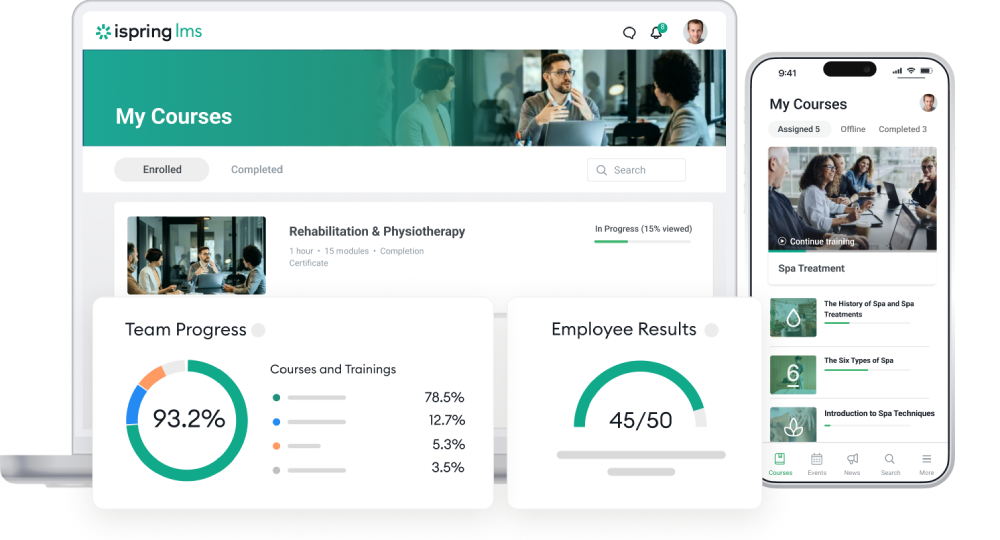
iSpring LMS is a mid-market and SMB platform with a simple admin experience and a direct path from PowerPoint to a trackable course. It pairs with the iSpring Suite authoring toolkit.
Best for: teams that already build training in PowerPoint and want fast setup.
Key features:
- PowerPoint-based authoring through iSpring Suite, plus SCORM publishing.
- Automation for enrollment, certificate issuance, and report delivery.
- Programmable, detailed reports with saved templates.
- A knowledge base, on-the-job training, and 360-degree appraisal.
- Multilingual interface, a mobile app with offline content, and 24/7 human support.
- Integrations with MS Teams, Zoom, and Google Meet.
Where it beats TalentLMS: two areas stand out for switchers. The authoring workflow turns existing slide decks into courses quickly, and the automation trims manual admin. Reviewers also single out the support as fast and human. TalentLMS still holds an edge on its free tier and its very large template library, so weigh both.
Migration note: iSpring imports SCORM content. If your library was built in PowerPoint, it converts with little rework. For AI authoring and text-to-speech, note that the AI Course Generator and ElevenLabs voices sit with iSpring Cloud AI and iSpring LMS rather than the desktop Suite, so confirm the exact plan.
G2 rating: roughly 4.6 out of 5. Our iSpring LMS review covers setup and support in more depth.
2. TalentLMS vs. Docebo
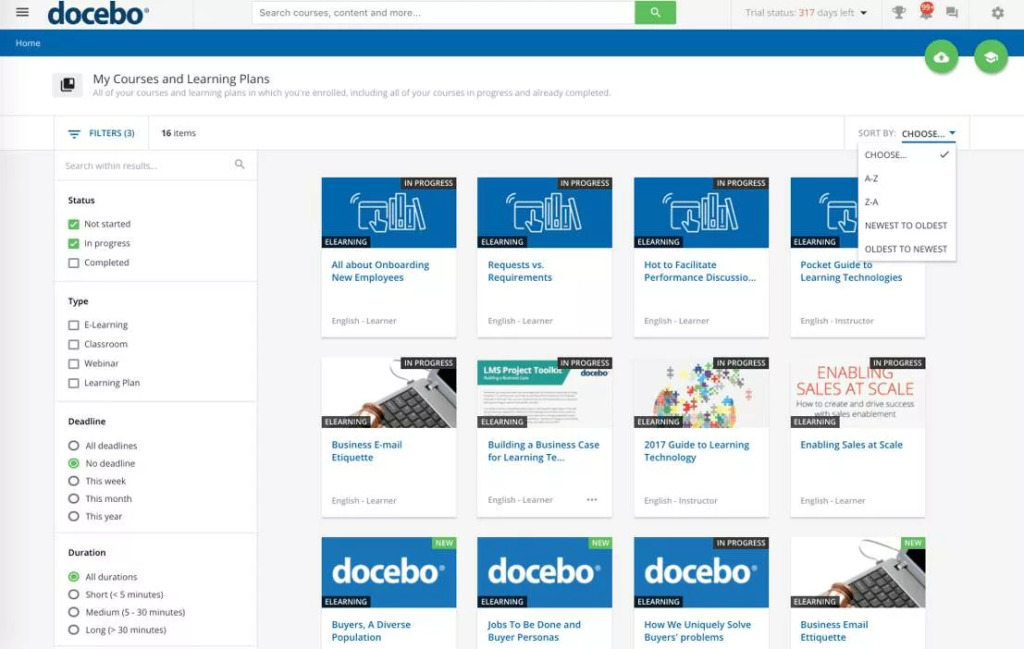
Docebo is an AI-powered enterprise learning platform used by thousands of organizations for employee, customer, and partner training. It leans on automation and skills mapping to run learning at scale.
Best for: large enterprises with dedicated L&D teams and multi-region rollouts.
Key features:
- An AI engine that tags imported content and surfaces relevant material to learners.
- Skills-based insights that connect learning to roles and business goals.
- A content marketplace with courses from established providers.
- Native connectors for CRM, HRIS, e-commerce, and SSO.
Where it beats TalentLMS: the analytics and automation are built for volume. When you are tracking thousands of learners across business units, Docebo keeps up in a way an entry-level tool does not.
Migration note: Docebo supports SCORM and xAPI, so your existing courses transfer. Plan for a guided implementation, since setup is more involved than TalentLMS.
G2 rating: roughly 4.3 out of 5. Read our full Docebo review for the detail, or the wider list of Docebo alternatives.
3. TalentLMS vs. Absorb LMS
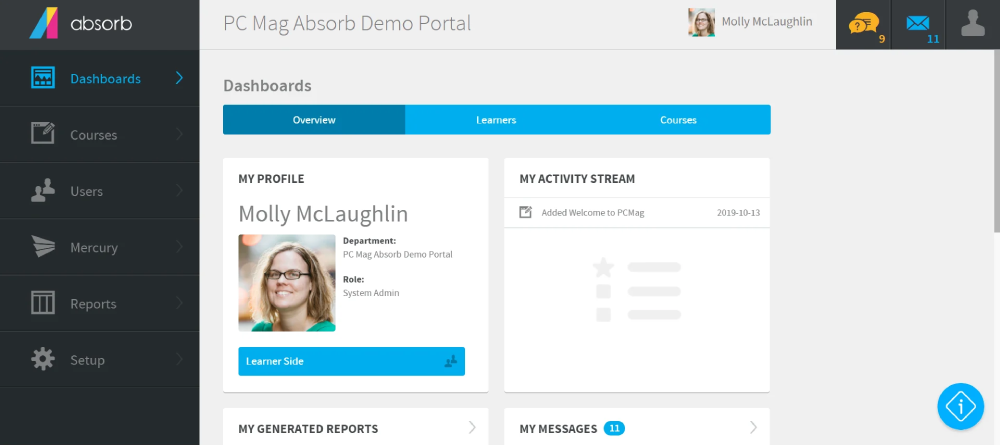
Absorb LMS is a unified LMS aimed at mid-size and enterprise teams that treat reporting as a core requirement, not a nice-to-have. It trains employees and external audiences from one place.
Best for: teams where compliance tracking and analytics drive the buying decision.
Key features:
- Absorb Analyze, a dedicated reporting tool that goes past standard dashboards.
- AI-assisted content creation and scalable learning paths.
- Support for SCORM and xAPI content with strong tracking.
- A modern learner interface with solid mobile access.
Where it beats TalentLMS: two things stand out. The reporting is far deeper, and Absorb publicly completes SOC 2 Type 2 examinations for Security, Availability, and Confidentiality. That matters when IT signs off on the purchase.
Migration note: Absorb imports SCORM and xAPI packages cleanly. Ask about services to move user records and completion history so your audit trail stays intact.
G2 rating: roughly 4.6 out of 5.
4. TalentLMS vs. LearnUpon
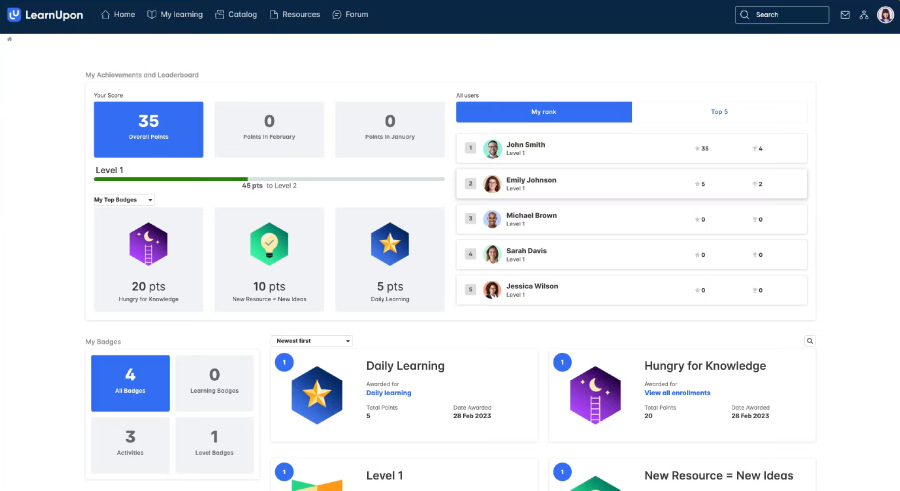
LearnUpon is a corporate LMS known for running several distinct training audiences from a single back end. It gives each group its own portal, look, and content.
Best for: businesses training employees, customers, and partners at the same time.
Key features:
- Separate, customizable portals for each audience.
- Course creation with webinar integrations for blended learning.
- Custom reports you can build and deliver quickly.
- Frequent product updates and strong onboarding support.
Where it beats TalentLMS: the multi-portal model is cleaner. If you are juggling channel partners and new hires in one TalentLMS instance, LearnUpon keeps them separate without extra workarounds.
Migration note: SCORM and xAPI import is standard. LearnUpon is well regarded for guided implementation, which smooths the switch.
G2 rating: roughly 4.5 out of 5.
5. TalentLMS vs. 360Learning
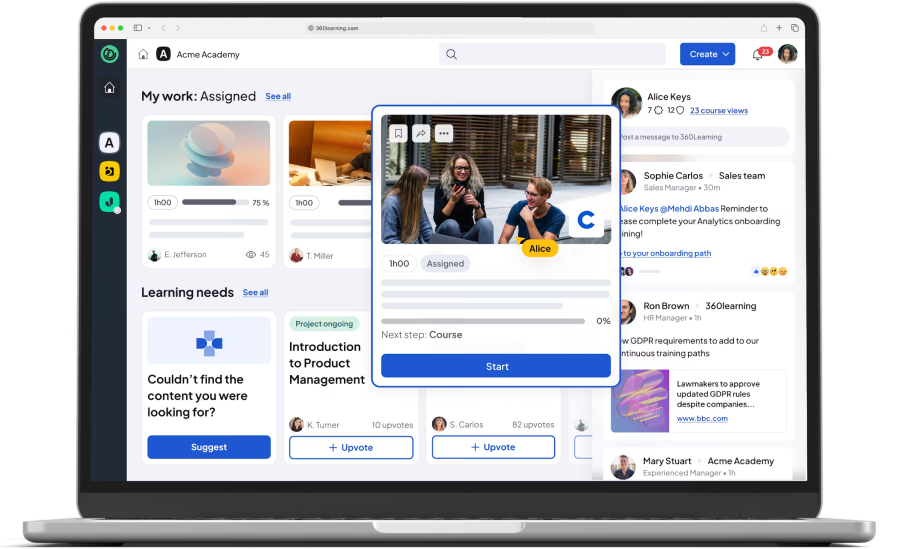
360Learning is a collaborative LMS. It turns your in-house subject matter experts into course creators instead of routing everything through a central team.
Best for: small to mid-sized organizations that want experts owning the content.
Key features:
- Collaborative authoring that converts PDFs and slides into courses.
- Forums and rating systems that drive peer engagement.
- Built-in content management and reporting.
- Per-active-user pricing that is published up front.
Where it beats TalentLMS: the authoring model is the difference. Reviewers praise how quickly non-experts build content, which keeps training current without a big L&D bottleneck.
Migration note: expect some onboarding effort on the admin and content-creator side. Budget structured setup time if you do not have an L&D lead to guide it.
G2 rating: roughly 4.6 out of 5.
6. TalentLMS vs. Litmos
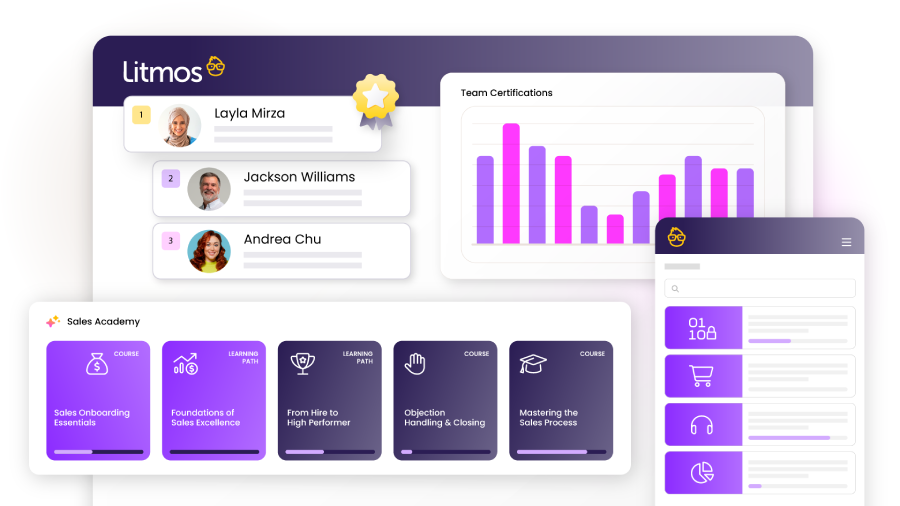
Litmos delivers and tracks on-demand training for large user counts and pairs it with a big off-the-shelf course library. It is a familiar name in compliance training.
Best for: compliance-heavy teams that want ready-made content fast, especially Salesforce shops.
Key features:
- The Litmos Training Content library of professionally produced courses.
- Course-building tools with quizzes, surveys, and checklists.
- Integrations with webinar tools, HR systems, and CRMs.
- E-commerce options for selling courses.
Where it beats TalentLMS: the content library is the draw. You can stand up a compliance program quickly without building every course yourself.
Migration note: Litmos handles SCORM and xAPI. If you sit inside Salesforce, the native fit reduces integration work during the move.
G2 rating: roughly 4.3 out of 5. See our Litmos review for a closer look.
7. TalentLMS vs. Moodle
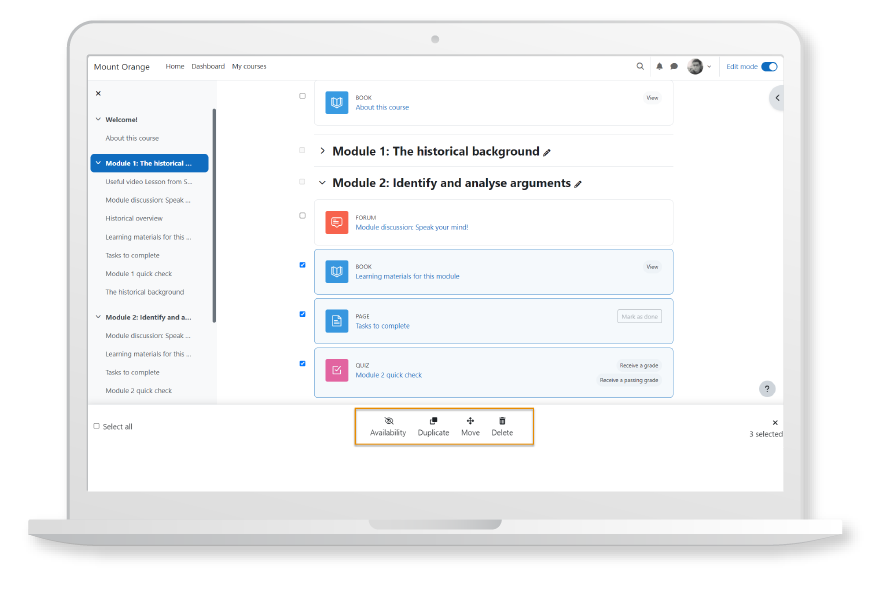
Moodle is the best known open-source LMS in the world, used by hundreds of millions of learners. You download the core for free and shape it around your needs.
Best for: teams with technical resources and a tight software budget.
Key features:
- A free, open-source core you can host and extend.
- A huge plugin ecosystem for almost any workflow.
- Deep course-building and assessment tools.
- Full control over data, hosting, and customization.
Where it beats TalentLMS: cost and control. There is no per-user license on the core, and you can customize things a hosted platform will not let you touch.
Migration note: Moodle imports SCORM content. The catch is ownership. You handle hosting, security, and upgrades yourself, or you pay a partner to do it.
G2 rating: roughly 4.1 out of 5. Read our Moodle review before you commit to the open-source route.
8. TalentLMS vs. Adobe Learning Manager
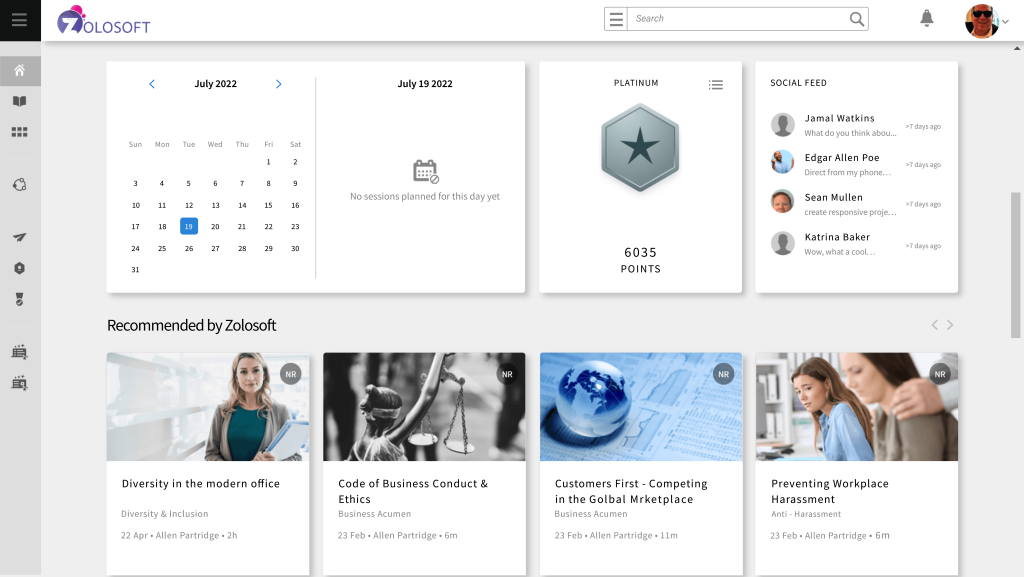
Adobe Learning Manager, formerly Captivate Prime, is built for extended enterprise use. It handles employees, customers, and partners with a strong focus on engagement.
Best for: customer and partner education programs that want gamification.
Key features:
- A fluidic player that plays most content types without conversion.
- Gamification with points, badges, and leaderboards.
- Learner recommendations driven by role and interest.
- Solid reporting for extended audiences.
Where it beats TalentLMS: the extended enterprise depth is greater, and the gamification is more polished for external learners you want to keep coming back.
Migration note: the player accepts a wide range of formats, so content moves without much rework. Setup is heavier than TalentLMS, so plan for it.
G2 rating: roughly 4.1 out of 5.
9. TalentLMS vs. CYPHER Learning
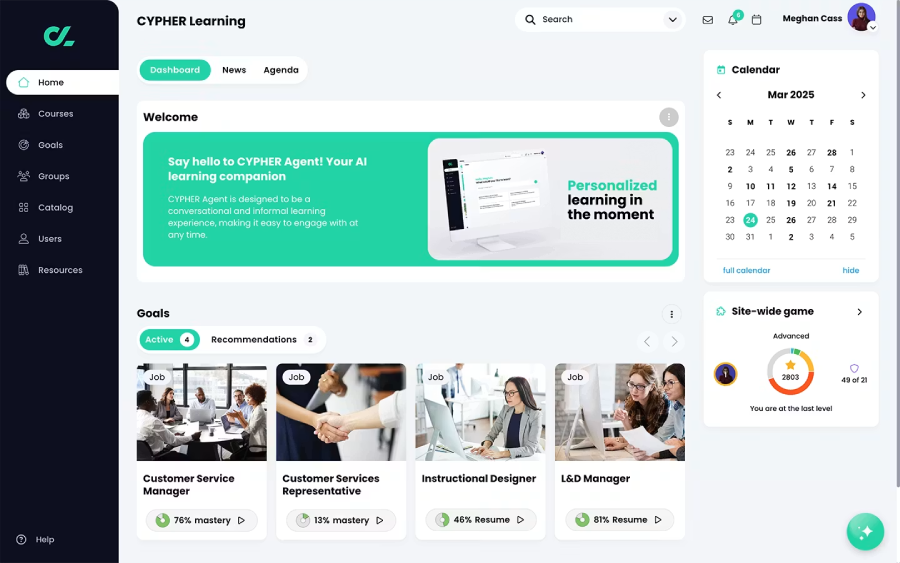
CYPHER Learning bundles an LMS, an authoring tool, and skills tracking into one product. It serves both business and education, with a reputation for gamification and personalized learning.
Best for: buyers who want fewer moving parts and built-in course creation.
Key features:
- A built-in authoring tool, so you do not license a separate one.
- Competency and skills mastery tracking.
- Gamification and personalized learning paths.
- Integrations with third-party tools and content.
Where it beats TalentLMS: you get authoring and skills tracking inside the platform. That means less stitching together of separate tools to cover the full workflow.
Migration note: CYPHER supports standard content formats. Ask about how it maps your existing course structure into its skills model during setup.
G2 rating: roughly 4.4 out of 5.
10. TalentLMS vs. Tovuti
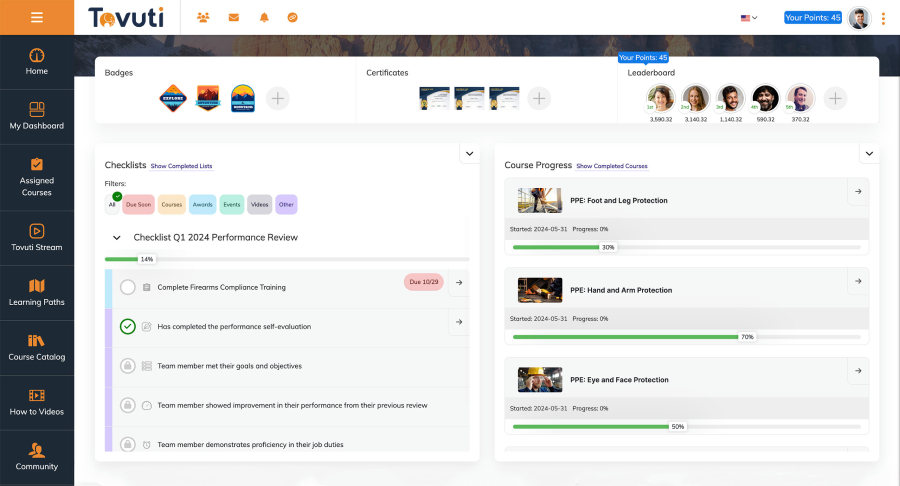
Tovuti is an interactive LMS with a wide set of built-in content types and gamification. It is often compared with TalentLMS on the SMB and mid-market side.
Best for: teams that want engaging, interactive courses without a lot of add-ons.
Key features:
- Interactive modules like flashcards, drag-and-drop, and branching.
- Gamification to lift completion rates.
- Virtual classroom and event tools.
- Built-in reporting and automation.
Where it beats TalentLMS: engagement is where Tovuti pushes harder. More interactive formats ship out of the box, so courses feel less flat.
Migration note: Tovuti reads SCORM content. Confirm which interactive elements you would rebuild natively versus import as-is.
G2 rating: roughly 4.6 out of 5.
What to weigh before you replace TalentLMS

A shortlist is only useful if you can narrow it. Run each option through these six questions.
- Audience size and structure. Are you training one group or several? Multi-audience needs point to LearnUpon or Absorb. A single team can stay lighter with iSpring or Tovuti.
- Analytics. If leadership wants business metrics, not just completions, weight this heavily. Absorb and Docebo lead here.
- Integrations. List your must-have connections, such as HRIS, CRM, SSO, and conferencing. Then check native support versus middleware for each candidate.
- Security and compliance. Write down your hard requirements, like SOC 2, GDPR, or HIPAA. Ask each vendor for current reports rather than trusting a marketing page.
- Budget and total cost of ownership. Compare pricing models, not just headline numbers. A per-active-user plan and a flat platform fee behave very differently as you grow. Factor in setup, add-ons, and admin time.
- Migration effort. How much of your current library and history has to move? A platform that reads SCORM and xAPI and offers migration help will cost you less pain.
If you are sizing up options by company type, our guides to enterprise LMS platforms and small business LMS options are a good next step.
Migrating off TalentLMS: what to plan for

This is the part most vendor pages skip. Switching platforms is a project, and the training history question is usually what keeps people on TalentLMS longer than they want to be. Here is how I walk clients through it.
Your content. Courses built to SCORM or xAPI are portable. Every platform in this guide reads at least one of those formats, so standards-based courses move without a rebuild. Content authored inside TalentLMS itself is the exception. Native course pages often need recreating or exporting to a standard format first.
Training history and records. This is the big one. Completion records, certificates, and enrollment history do not always transfer automatically. Some vendors offer a migration service that maps old records into the new system. Others hand you a data export and leave the import to you. Ask the specific question early: will my completion and certification history come across, and in what format?
Users and structure. User accounts, groups, and role permissions have to be rebuilt or imported. Map your current structure before you start so you are not recreating it under deadline pressure.
Integrations. Any HRIS, CRM, or SSO connection you rely on needs rebuilding on the new platform. Confirm native support during evaluation, not after you sign.
Change management. The technical move is only half the job. Admins need training on the new tool, and learners need a heads-up so logins and links do not break their routine. A short internal rollout plan prevents most of the complaints.
A practical tip: run the two platforms in parallel for a short window. Keep TalentLMS live while you validate the migration, then cut over once records and access check out. If you want the standards background, our guide to SCORM-compliant platforms explains what transfers and why.
Is there a free TalentLMS alternative?
Short answer: yes, with some catches.
Moodle is the real free option. The core is open-source and costs nothing to download. You pay in other ways, since hosting, security, upgrades, and customization land on your team or a paid partner. For a company with technical hands, that trade can be worth it. For a lean team without IT support, the running cost often erases the savings.
Free tiers are the other route. Several platforms, including TalentLMS itself, offer a limited free plan capped by users or courses. These are fine for a pilot or a very small team. They are not built to run a growing training program.
If free is your priority, weigh it against setup effort and long-term cost before you commit. Our roundup of free LMS platforms breaks down where each one fits.
The bottom line
There is no single best replacement, and that is the point. The right TalentLMS alternative depends on your audience size, your reporting needs, your compliance bar, and how much of your training history has to move. Build your shortlist from the ten above, ask each vendor the migration question early, and pick the platform that fits the team you are becoming, not the one you have today.
If you want to keep comparing, start with our full hub of LMS alternatives and comparisons.
FAQ
Why do companies switch from TalentLMS?
Most teams outgrow the entry tier. Reporting stays basic, per-active-user pricing gets less predictable as usage grows, and admins hit limits when workflows get complex. Security requirements like SOC 2 also push some buyers to look elsewhere.
Is TalentLMS SOC 2 compliant?
TalentLMS publishes ISO 27001:2022, ISO 9001, GDPR alignment, and CSA STAR Level 1. It does not advertise a SOC 2 Type 2 report the way some rivals do. If SOC 2 is a hard requirement, ask TalentLMS for the current report directly. By comparison, Absorb publishes its SOC 2 Type 2 openly.
What is the best TalentLMS alternative for a small business?
For most small businesses, iSpring LMS and Tovuti are strong picks. Both are quick to set up and easy to run without a dedicated IT team. iSpring is the natural fit if your training already lives in PowerPoint.
What is the best TalentLMS alternative for enterprise?
Docebo and Absorb LMS are the usual finalists. Docebo leads on AI content and skills at scale. Absorb leads on reporting depth and openly published SOC 2. LearnUpon is worth a look if you train multiple external audiences.
Is there a free alternative to TalentLMS?
Moodle is the main free, open-source option, though you cover hosting and maintenance. Several platforms also offer limited free tiers that suit pilots and very small teams.
How hard is it to migrate off TalentLMS, and does my training history transfer?
Courses built to SCORM or xAPI move without a rebuild. Completion and certification history is the sticking point, since it does not always transfer automatically. Ask each vendor whether they offer a migration service and in what format records arrive.
Which TalentLMS alternative is the cheapest?
Moodle is cheapest on paper because the core is free. Among hosted platforms with published pricing, TalentLMS and 360Learning tend to be the most transparent to compare. Always price against your projected active users, not the headline rate.