Do you feel your presentations are too “static” and your learners disengage quickly? This often happens because simple presentations feel boring. The best way to make it more engaging is converting your Microsoft PowerPoint to SCORM and creating an eLearning course.
However, simply “converting” your PPT isn’t enough—classroom context/interactivity gets lost online, and you need some interactivity. At the same time, mastering a new course builder can be challenging. But what if you could take an existing piece of content, like a PowerPoint deck, and convert your PPT to a SCORM package in a couple of clicks?
With this guide, I’ll simplify your LMS and authoring tool choice. You’ll know why SCORM is better than simple PPT, find key presentation requirements, and realize how to convert PowerPoint to SCORM quickly and easily with different methods. You’ll also read about the main mistakes, best practices in converting your PPTs, and best tools to convert PPT to SCORM. Let’s get started!
TL;DR
Converting PowerPoint to SCORM turns static slides into interactive, trackable eLearning courses. The three main approaches are using PowerPoint-based authoring tools (like iSpring Suite), cloud platforms (like Articulate 360), or simple SCORM converters (like Scormify). SCORM ensures progress tracking, engagement, and LMS compatibility. Key considerations include SCORM version, LMS support, interactivity, and learner experience. Best practices focus on reducing slide overload, designing for self-paced learning, adding assessments, and ensuring accessibility. Avoid treating conversion as purely technical and always test in your LMS. Choosing the right tool depends on your team, goals, and workflow.
Why Convert PowerPoint to SCORM Instead of Uploading Slides
At this point, you might be asking, “Can’t I just turn my PPT into a video or upload the PowerPoint slides straight to an LMS?” Yes, you can. However, in both cases, you won’t get all the LMS perks.
Uploading slides as-is might seem convenient, but static PowerPoint files don’t interact well with most LMSs. They typically open as simple documents, do not offer navigation and other LMS capabilities. Basically, it works the same way as if you opened it in PowerPoint.
Also, it’s rarely enough to know that someone opened a file. Teams need clear data on progress, completion rates, and assessment results to measure learning effectiveness. Without tracking and reporting, you can’t make informed decisions about future training.
Finally, SCORM provides a common technical standard that ensures courses run smoothly across platforms while enabling tracking, reporting, and a more consistent learner experience.
SCORM presentations work well for anyone who needs more than just slide delivery. L&D teams and LMS admins use it to track learner progress and confirm completion accurately and consistently. Instructional designers rely on it to turn presentations into structured learning experiences. And for educators, it means clearer visibility into student engagement.
What Does “PowerPoint to SCORM Conversion” Really Mean
Turning PowerPoint into SCORM means converting a regular slide deck into a structured eLearning course that can communicate with a learning management system. Uploading a PowerPoint file to an LMS simply stores it as a document, while SCORM publishing turns it into a structured eLearning package.
Many assume SCORM conversion is just a technical export, but in practice, quality matters. While tools may offer a “one-click” publish option, effective conversion often involves adjusting navigation, checking media compatibility, and setting clear completion rules to ensure the course works as intended for learners and administrators.
A huge perk of the PowerPoint-to-eLearning approach is that you can control how your slides are viewed, in what order they appear, and whether it’s possible to skip them. That’s something that only authoring tools with SCORM support can do. They enhance slides with navigation controls, quizzes, interactions, and tracking settings, then package everything into a SCORM-compatible format that an LMS can recognize and run smoothly.
The 3 Ways to Convert PowerPoint Presentations to SCORM
Let’s look at 3 software methods to convert PPTs to eLearning:
- Using PowerPoint-based authoring tools
- Using cloud-based eLearning authoring platforms
- Simply uploading a video or slides
Method 1: PowerPoint-based authoring tools
For many teams, this is the most natural place to start. PowerPoint-based authoring tools let you work in a familiar environment while adding the features a standard presentation usually lacks.
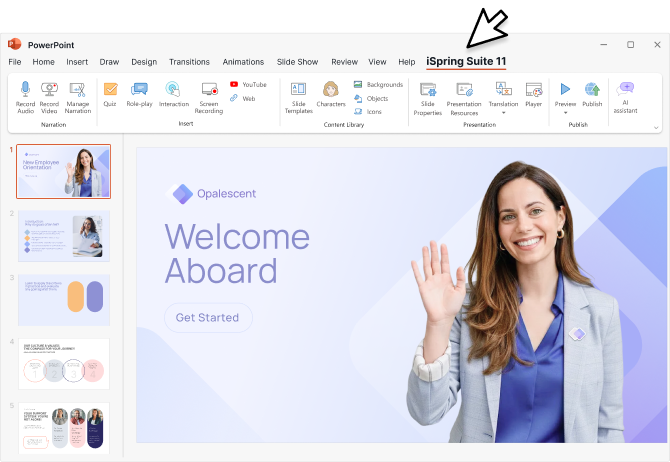
You can import your PPT file directly, which saves time and preserves your original design. From there, it’s easy to enhance slides with quizzes, voice narration, and simple interactions that keep learners involved instead of passively clicking through.
A good choice is iSpring Suite AI that started as a PPT-to-Flash converter in 2005 and has evolved to an all-around authoring tool that supports HTML5 and offers AI support. You can use it as a free simple PPT to SCORM converter or leverage its rich features to enhance your PowerPoint presentations with quizzes, interactive elements, and many types of engaging content.
Method 2: Cloud-based eLearning authoring platforms
Cloud-based platforms offer a different kind of flexibility. Instead of working inside PowerPoint, you upload your slides and often redesign them using built-in templates and online editing tools. One of the biggest advantages here is responsive output. Courses adapt more easily to mobile devices, and collaboration becomes simpler since multiple team members can review and edit content in real time.
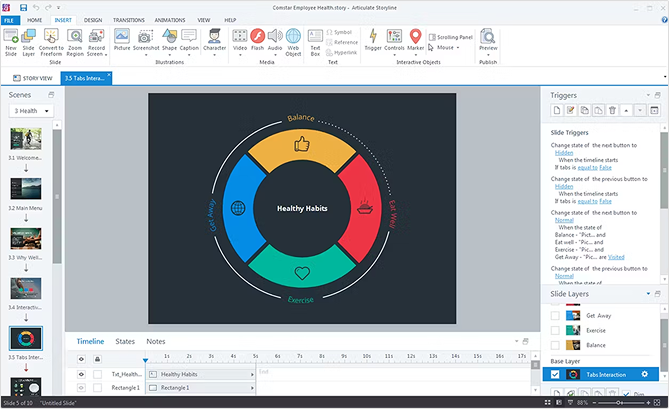
Here, Articulate 360 comes to my mind. This is a standalone application that you can import PPTX files into and get the course creation process going. The main features of Articulate Storyline, like quizzes and interactions, are very similar to what iSpring Suite offers. The major difference is that if you’ve only worked in PowerPoint so far, the interface will most likely scare you with its complexity at first.
Method 3: Alternative options (video or basic uploads)
In some cases, a full SCORM conversion might not be necessary. If the goal is simply to share information quickly, uploading slides directly or converting them into a video can be a practical short-term solution. However, SCORM provides more capabilities in terms of the data and structure most organizations eventually need.
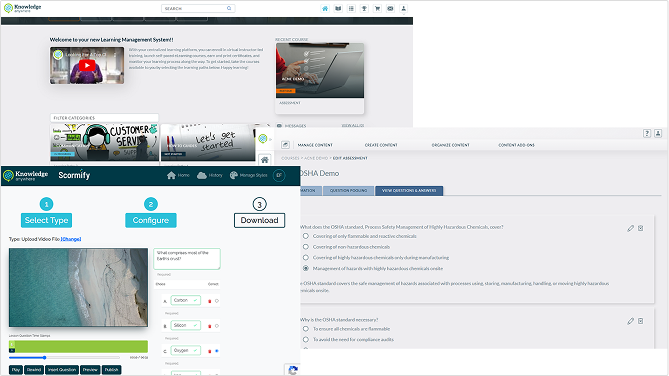
One of the tools that could work for this method is Scormify. It doesn’t have course-building capabilities, but it is a SCORM converter that instantly turns PPT files and other types of content into the SCORM format. Scormify is a quick and super budget-friendly way to convert PowerPoint to SCORM manually to get interactive eLearning content.
Key Requirements to Consider Before Converting Your PPT into SCORM
When you convert PowerPoint to SCORM, the goal isn’t just to make the file “work” in an LMS. You need to make sure the course runs smoothly, tracks the right data, and delivers the right learning experience. So what matters?
SCORM version. SCORM 1.2 is still the most widely supported format, which makes it a safe choice for compatibility. SCORM 2004, on the other hand, offers more advanced tracking options, like detailed completion rules and learning paths. The right choice usually depends on what your LMS can handle and what goals you want to achieve.
LMS compatibility. Not all platforms interpret SCORM packages the same way, so it’s important to test how navigation, bookmarking, and media playback perform before rolling a course out to learners. A quick pilot run can save hours of troubleshooting later.
Tracking requirements. Who started the course? Who finished it? How did they perform on quizzes? To get reliable data, define completion rules and assessment settings before you launch your course.
Interactivity for learner engagement. Adding knowledge checks, clickable elements, or scenario-based interactions can turn a passive presentation into an active learning experience, and that often makes the difference. Ensure your tools can provide these capabilities.
Best Practices for Converting PowerPoint to Effective eLearning
A good SCORM course feels like a guided learning experience designed for independent progress. How can you do that? Based on my experience, I would suggest the following.
Reducing slide overload. PowerPoint presentations often carry too much information per slide. During conversion, it helps to simplify content, break complex ideas into smaller steps, and focus on what learners truly need to know.
Designing for self-paced learners. Without a live presenter, clarity becomes even more important. Clear instructions, logical navigation, and a steady flow of information help learners stay engaged and avoid confusion.
Adding assessments and feedback. Knowledge checks don’t have to be complex to be effective. Short quizzes, reflection questions, or scenario-based exercises reinforce learning and give both learners and administrators useful insights.
Accessibility and usability considerations. Small adjustments can make a big difference. Readable fonts, clear contrast, captions for audio, and intuitive navigation ensure that more learners can comfortably complete the course, regardless of device or ability.
Common Mistakes to Avoid When Converting PPT to SCORM
While looking simple on the surface, PowerPoint to SCORM conversion can be somehow challenging. Avoiding common errors converting PowerPoint to SCORM may save the whole project:
Do not treat conversion as a purely technical task. Without thoughtful design, even technically perfect courses may struggle to engage learners.
Always keep in mind learner interaction and outcomes. When courses focus only on content delivery, they miss the opportunity to reinforce knowledge and measure understanding. Even small interactive elements can improve retention and motivation.
Never publish the course without LMS testing. Skipping LMS testing is one of the fastest ways to create avoidable issues. This step often determines whether the learner experience feels smooth or frustrating. Before you export the course:
- Preview your content: this is the time to check navigation, timing, quiz behavior, and media playback.
- Upload it to LMS and validate: test it as a learner would. Confirm that everything works as expected.
- Troubleshoot common issues: check if no problems appear. If they do, review completion rules and re-export the SCORM package.
Choosing the Right Tool
Finally, we approached the main question: how to choose the perfect tool for your goals. I am sure that before you purchase the tool, you’ll compare all the capabilities. But besides that, it would be helpful if you consider some other things.
LMS and SCORM support. Check compatibility with your LMS before committing. Reliable SCORM export, flexible tracking settings, and stable playback across devices can make a significant difference in day-to-day course management.
Skill level and team size. Start with an honest look at who will be creating the courses. If your team is small or new to eLearning, PowerPoint add-ons with familiar interfaces and built-in templates can shorten the SCORM courses learning curve. More experienced teams may benefit from platforms that offer deeper customization and collaborative workflows.
Speed vs instructional depth. Some tools help you move from slides to SCORM quickly, which is perfect for updates or time-sensitive training. Others support more advanced branching, scenario-based learning, and more. Consider what is more important here and now: to make it faster or to make it deeper and more engaging.
Budget and licensing model. Pricing structures may vary significantly. Some tools use annual subscriptions, while others charge per author or per project. It’s worth considering not just the upfront cost, but how often you’ll create courses and how many people will need access.
Conclusion
The real SCORM value lies in learning impact, not just format: SCORM tracks progress, reinforces knowledge, and keeps learners engaged, transforming static slides into effective online training.
Converting PowerPoint slides to SCORM makes learning measurable, interactive, and scalable. You can use a PowerPoint-based authoring tool like iSpring Suite, a cloud platform such as Articulate 360, or a simple SCORM converter like Scormify. And it will work well if you choose it correctly. And the right choice depends on your team and goals. Choose the right approach to convert PowerPoint to SCORM quickly, and it will pay off (almost!) immediately.
By the way, if you don’t have access to an LMS but would like to make sure your module works properly, check out my article on how to test SCORM without an LMS.
FAQ
Can PowerPoint be converted to SCORM?
Yes, using authoring tools or SCORM converters, you can turn a PowerPoint presentation into a fully trackable SCORM course.
How to create a SCORM file from PowerPoint for free?
You can use free tools like iSpring PPT to SCORM converter or basic SCORM converters like Scormify to publish your PPT as a SCORM package.
Can you import PowerPoint into Articulate?
Yes, Articulate 360 allows you to import PPT slides to start building your course.
How do I import SCORM into LMS?
Export your course as a SCORM package, then upload the file to your LMS using its course import feature. SCORM files created with tools like iSpring Suite are ready to upload and track right away.